|
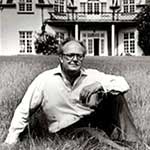
Lord Rathcavan
Late Irish Guards
|
Hugh O’Neill was driving at great speed through northern France in June 1972 when a wild boar ran into the road, sending him crashing into a tree and rolling into a ditch, where he lay unnoticed for several hours. The boar and the car were write-offs; O’Neill broke both legs and needed a seven-hour operation to insert a 12in steel plate in his thigh.
He had more luck with bulls and bears, using his six months in a champagne-filled hospital room to make £1.25 million on the stock market for 1,500 small investors in Southern Cross investment group, his employer. Stockbrokers fed him share prices and awaited his orders, while in the afternoons his secretary perched on his bed taking dictation.
The boar incident did not diminish O’Neill’s love for all things French, including the cooking, wine, eventually a French wife and the language, which he spoke well enough to be rude to his mother-in-law. However, he grew bored of the City and in 1980, ‘in a fit of excess’, took over the former Brompton Grill in Knightsbridge with Didier Garnier, a young maître d’ who now runs Le Colombier in Chelsea, and Quentin Crewe, the restaurant critic and O’Neill’s cousin in whose honour they named the establishment Brasserie St Quentin.
Their aim was to fight back against nouvelle cuisine. ‘Who wants a plate of smoked salmon with a strawberry?’ O’Neill asked, though on opening night the cuisine was almost too nouvelle when the sous chef cut off his finger and was whisked away by an ambulance in sight of the guests.
Diners’ orders were handled manually. ‘The chef’s wife produced handwritten bills at the cash desk and behaved like a mullah’, he said. ‘An Irish lady, Miss Murphy from Cork, filled in the bought ledger with an ink pen and answered the telephone like a haberdasher from Skibbereen, except it was “Brassière Saint Quentin”’.
An elderly stock taker visited once a month to weigh the surviving fish and count the unopened bottles, but his reports were irreconcilable with Miss Murphy’s ledgers. With the bank balance heading south, Miss Murphy took to the hills. Yet ‘by trial and error, hook and crook, we got it right to see the blue skies of success’, he said.
O’Neill was a jovial, sometimes libidinous figure, helping to create the convivial atmosphere enjoyed by a glittering array of diners. Each morning, he stuck a finger into the table flowers to ensure they had sufficient water. He once threw David Bailey out, claiming that the photographer ‘looks like a tramp’. En route to Northern Ireland he dropped in for a vodka and orange, plus another to drink while driving to the airport.
He recalled how Princess Margaret once dined at the brasserie and asked to see the kitchen. ‘Our great maître chef, Charles Plumex, well over 7ft in his toque and twice the height of HRH, called his brigade to attention like a drill sergeant in the Irish Guards’, he said. ‘His chefs froze with wooden spoons and whisks in the ‘present arms’ position … It was a moment to savour’.
After ten years O’Neill and his colleagues sold the business to the Savoy Group, a move he soon regretted. In 2002, having succeeded as the 3rd Baron Rathcavan and by then pursuing a career promoting tourism in Northern Ireland, he bought it back, ‘supported by a few fellow peers, a clever gourmet investment banker and a colossus chef friend’.
In 1980 his biggest challenge had been ‘dodging Frisbee plates, thrown by disgruntled Greek waiters’; now he had to deal with ‘the nightmare of IT, BT, Epos or anything to do with modern technology’. Meanwhile, English-speaking waiters with valid national insurance numbers proved hard to find. ‘Our first customer asked for a Virgin Mary’, he said. ‘Our beautiful statuesque lady on the temporary cash desk wrote down One Virgin Harry’.
Hugh Detmar Torrens O’Neill was born at his grandparents’ home in Knightsbridge in 1939, the younger of two children of Phelim O’Neill, who was the Alliance Party’s first parliamentary leader and became the 2nd Baron Rathcavan, and his wife Clare (née Blow). His grandfather, also Hugh, was the first Speaker at Stormont. Another kinsman was Terence O’Neill, the former prime minister of Northern Ireland.
His earliest memories were of wearing a Mickey Mouse-style gas mask while hiding beneath a solid oak table during the Blitz. His parents’ marriage disintegrated in a well-publicised divorce in which his mother was found to have ‘committed misconduct’ with Major Lewis Starkey, known as Cuckoo, of the Grenadier Guards. During one of their assignations, she took the children into London during an air raid, which resulted in their father winning custody.
Hughie and his sister Mary Rose, who predeceased him, were largely raised by their nanny at Cleggan, their paternal grandparents’ home in Co Antrim. He had miserable memories of visiting his mother and Cuckoo, where he was made to sleep in a separate building. His father also remarried and had four daughters, one of whom died in infancy.
He was educated at Selwyn House, Kent, and Eton, where his blond hair and diminutive figure made him a target for sadistic older boys who beat him for offences such as flicking cherry stones into the maids’ rooms. Neither parent visited, while at home there was ‘agony every time the school bills arrived, with father moaning’. Yet with hindsight ‘it was a useful place to go’. Holidays involved shooting, fishing and smoking with friends. After one such escapade he wrote to his host saying what a relief it had been to escape from his ghastly stepmother, but the letter was discovered by said stepmother with inevitable consequences.
Commissioned into the Irish Guards in 1958, O’Neill was sent to Cyprus, a posting memorable for the unspeakable sanitary conditions. After four months he returned for guard duties at Windsor Castle. During Ascot week the Queen customarily invited the officer on guard for dinner, an occasion he prepared for with a strong drink and several more on arrival.
His next posting was to Singapore as aide-de-camp to Major-General ‘Tommy’ Harris, the General Officer Commanding. While on leave he explored Thailand by train with a friend. They continued into Cambodia but were caught buying local currency on the black market and beat a hasty retreat back across the border.
Having met Gordon Richardson, a future governor of the Bank of England, he was offered a position at Helbert Wagg (later Schroder Wagg) but did not sit well there and was seconded to The Observer to gain broader experience. He ended up as City editor of the Irish Times in Dublin, hanging out with a bohemian set and enjoying ‘a mad, wonderful life … lots of atmosphere, drinking and deadlines’.
While living in the chauffeur’s flat of Leixlip Castle, in Co Kildare, he began an affair with the chatelaine Mariga Guinness, a German princess and wife of Desmond Guinness of the brewing family. She followed him to London when he joined the Financial Times. Together they restored an early 18th-century former Huguenot silk-merchant’s house on Elder Street in Spitalfields, then an unfashionable part of east London, where they lived with Xerxes, Mariga’s pet parrot. Denied a transfer to New York by the FT, he joined Southern Cross in 1970 and began running a luncheon club for City friends and hosting hedonistic parties.
O’Neill’s encounter with the French boar precipitated a reassessment of his life. The relationship with Mariga ended and he teamed up with Sir Desmond Lorimer, the Belfast businessman to co-found Lamont Holdings, the textile group. He inherited Cleggan from his 99-year-old grandfather in 1982 and 12 years later succeeded in the title. In 1983 he married Sylvie Chittenden (née Wichard du Perron), and the music for their reception at Brasserie St Quentin was provided by the Chieftains. Sylvie survives him with their son François (who in 2008 took over his father’s reacquired brasserie and in 2020 founded Maison François in St James’s) and by twin stepsons, Hugo and Oliver.
In 1986 O’Neill, a ‘très bon viveur’ with a fine baritone voice, was appointed chairman of Northern Ireland Airports, expanding the catering at Aldergrove airport to include Ulster oysters, Ulster salmon and Irish whiskey. On one occasion he arranged for Concorde to make a rare visit to Aldergrove.
Undeterred by receiving a live bullet in the mail, he became chairman of the Northern Ireland Tourist Board in 1988, admitting that he was promoting ‘what is known as a difficult destination’. He targeted specialist interest groups, adding: ‘Birdwatchers are intrepid people. They will go anywhere in the hope of seeing something rare. The Troubles did not put them off’. In 1998 he introduced The Taste of Ulster, insisting that no one could tell the difference between a Catholic cauliflower and a Protestant one.
O’Neill looked back on his days at Brasserie St Quentin with nostalgia, recalling his first Christmas there. Terrified that the all-French staff would go home and not return, he invited them to Cleggan. ‘St Patrick’s Church has never recovered from the sound of ‘spliffed’ French waiters falling off their pews during the Christmas Eve devotions’, he said. ‘Nor has my grandmother’s wardrobe, used for the cross-dressing party that continued throughout Christmas Day’.
The 3rd Baron Rathcavan was born on born on 14th June 1939, and died on 11th November 2025, aged 86.
With thanks to The Times |
|